
How Fleischmann Wealth Built a Catskills Baseball Power
Separates the supported story—purpose-built grounds and pro talent—from disputed claims about 56–4, Honus Wagner and the club’s final years.
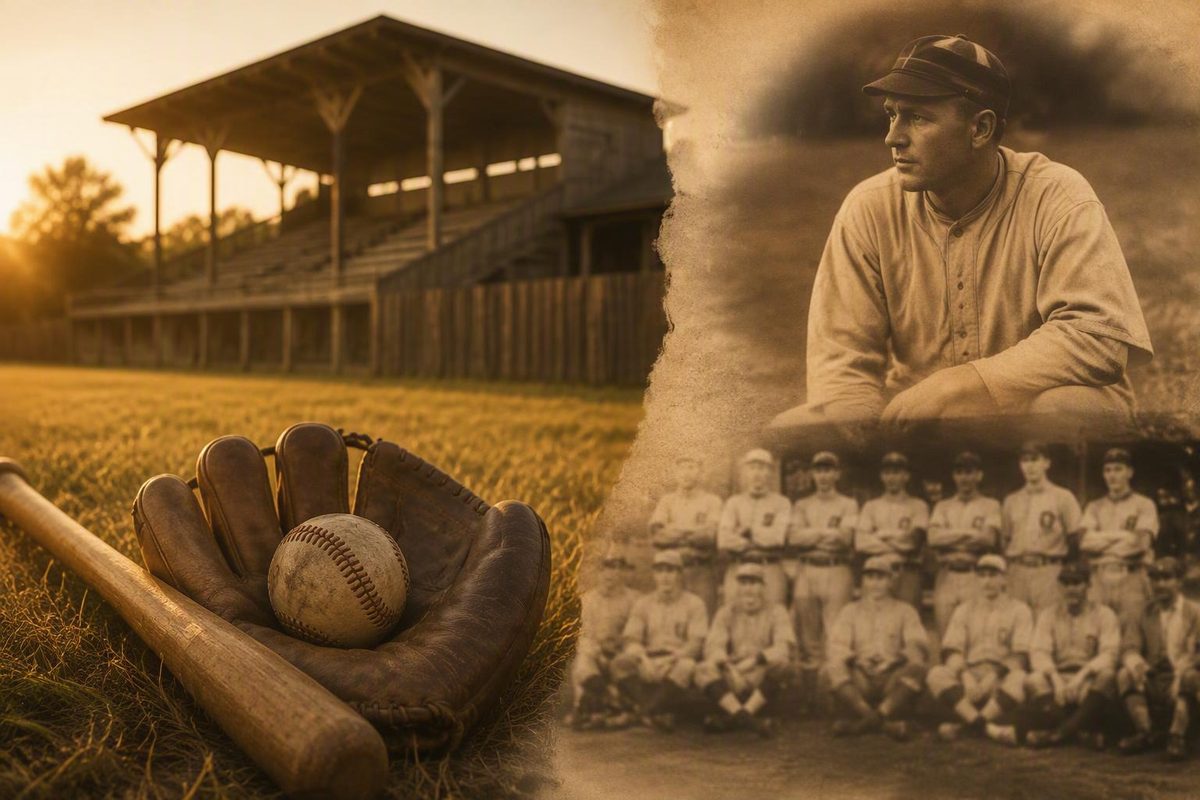
Beginning around 1894 or 1895, Julius and Max Fleischmann sponsored—and played for—a summer baseball club in Griffin Corners, the Catskills village now called Fleischmanns. Family money turned a resort-town pastime into the Mountain Athletic Club, an independent attraction with purpose-built grounds and a roster that mixed wealthy patrons, amateurs, minor leaguers, and major-league talent.
That broad history is more secure than the club’s most famous claims. Its professional-caliber operation appears consistently in retrospective accounts, but the reported 56–4 record, exhibition victory over Cincinnati, Honus Wagner connection, and final chronology are not equally documented.
Mountain Athletic Club history at a glance
The club was most often called the Mountain Athletic Club or Mountain Tourists, with Mountaineers appearing in some accounts. Although based in the Catskills, it sometimes represented Cincinnati, reflecting the Fleischmann family’s roots and the connections of many players rather than a different home city.
The early chronology below draws principally from an archived 2011 retrospective of the Mountain Athletic Club. Later entries identify the club-affiliated, journalistic, or regional source responsible for the claim.
| Year | Event | Evidence status |
|---|---|---|
| c. 1894–1895 | Julius and Max Fleischmann begin sponsoring and playing summer baseball in Griffin Corners. | Disputed or unresolved: the 2011 retrospective allows an approximate beginning; most later accounts use 1895. |
| 1896 | A purpose-built, four-acre baseball ground is reportedly ready. | Broadly supported in retrospective accounts: the detailed physical description comes chiefly from the 2011 history. |
| 1899 | The roster becomes substantially professional, the club travels beyond the Catskills, and it reportedly splits two games with the All-Cubans. | Mixed: professionalization is consistently reported; the scores and itinerary come from the retrospective. |
| 1900 | The club reaches its reported competitive peak, supposedly losing four of 60 games and defeating Cincinnati. | Reported but unverified: a club-maintained history repeats both claims without reproducing a complete season record. |
| 1903 | Mountain Athletic Club reportedly defeats the Cuban Giants 3–1. | Reported but unverified: a baseball-history account presents an image described as the scorecard. |
| 1913–1914 | Accounts place the park’s transfer to public use, the village renaming, and the original club’s end period within these years. | Disputed or unresolved: a WAMC feature uses 1913 for the renaming; club-affiliated histories commonly use 1914. |
| 2007 | A vintage base ball team revives the Mountain Athletic Club identity. | Reported: a local newspaper account attributes the revival to Todd Pascarella and Dave Morell. |
| 2011 and 2017 | The revival reportedly goes on hiatus after Hurricane Irene flooding, then returns to play. | Reported: the dates appear in regional event coverage. |
| 2020 | The M.A.C. Grounds reportedly receive state and National Register recognition. | Reported by modern organizations: the designation is stated by the Delaware County Vintage Base Ball Association, among other regional sources. |
The current Mountain Athletic Club should therefore be understood as a historical revival, not a demonstrated continuous organization dating from the nineteenth century. Modern accounts use words such as “revived” and “resurrected,” which acknowledge a break between the original club and the present vintage base ball team.
Why the Fleischmann brothers built a baseball club in the Catskills
Julius and Max Fleischmann were sons of Charles Fleischmann and members of the family behind the Cincinnati yeast-making business. The family vacationed in Griffin Corners, where it developed a compound near the railroad depot. Julius and Max were not distant benefactors: retrospective histories place both brothers on the early team.
Most later accounts identify 1895 as the founding year. The more defensible formulation is that Fleischmann sponsorship began around 1894 or 1895. The archived 2011 history describes the beginning only approximately, while the modern club and regional histories prefer the cleaner 1895 date. Those later repetitions establish the date as local tradition, but not necessarily as the product of separate contemporary records.
The team was not organized like a conventional franchise dependent on ticket sales. The Fleischmanns treated baseball chiefly as summer recreation and hospitality—for themselves, their guests, and the resort community. The 2011 retrospective says admission was free or nominal and that the family absorbed the expenses.
That operating model fit Griffin Corners. The Catskills attracted seasonal visitors, while the railroad placed travelers near the Fleischmann compound and ballpark.
The result does not fit comfortably into a modern organizational category. The club combined patrons and amateurs with minor leaguers and players who had or would acquire major-league experience. Histories variously describe it as semiprofessional or substantially professional, but none of the cited accounts identifies a formal league affiliation. It is best understood as an independent summer club financed well enough to operate at a professional caliber.
The 1896 grounds: a private baseball showcase
The Fleischmanns had a four-acre site north of present-day Wagner Avenue leveled for baseball. According to the archived retrospective, the grounds were ready in 1896 and included a manicured skinned infield, grandstand accommodations for the Fleischmann family and roughly 600 guests, and a clubhouse with three dressing rooms. The same account identifies John Blish as groundskeeper and says the club’s season generally began in mid-June. It also reports that the family guaranteed visiting clubs $150 and provided travel and lodging arrangements.
Those details come from a retrospective rather than a reproduced construction plan, contract, or contemporary newspaper report. They nevertheless describe a coherent operating model: baseball infrastructure was integrated into the Fleischmann family’s broader resort hospitality.
The grounds were therefore more than a cleared village field. That conclusion does not require accepting later descriptions of the park as the country’s finest or “classiest.” Those are judgments. The narrower historical point is striking enough: private industrial wealth created an unusually elaborate baseball setting in a small resort village.
From summer pastime to professional-caliber team
Mountain Athletic Club blurred distinctions that later became more formal. Julius and Max could take the field beside local amateurs, minor leaguers, and established or future major leaguers. By 1899, the retrospective presents the roster as substantially professional, although it does not place the club in an organized league.
Bug Holliday illustrates the reach of Fleischmann patronage. After Cincinnati released him in July 1898, he reportedly joined the Catskills club. The following summer, the team traveled to Ilion, Richmond Springs, Weehawken, and Jersey City, evidence of an independent nine operating beyond neighboring towns rather than waiting exclusively for opponents to visit Griffin Corners.
The periods and associations below are those reported by the archived retrospective and the modern club’s historical overview. They should not be read as a fully verified scorebook or contract register.
| Player | Reported M.A.C. period | Baseball significance | Confidence note |
|---|---|---|---|
| Bug Holliday | 1898 | Established Cincinnati major leaguer | Reportedly joined after his July release |
| Miller Huggins | 1900 | Future major-league player and manager | Repeatedly associated with the peak roster |
| Nick Altrock | 1900 | Major-league pitcher | Repeatedly associated |
| Doc White | 1900 | Major-league pitcher | Repeatedly associated |
| Red Dooin | 1900 | Future major-league catcher and manager | Repeatedly associated |
| George Rohe | 1900 | Future major-league infielder | Repeatedly associated |
| Jiggs Donahue | 1900 | Future major-league first baseman | Repeatedly associated |
These associations support the conclusion that professional players appeared for Mountain Athletic Club. They do not establish every spelling, alias, season, or photograph caption. The 2011 retrospective itself flags uncertain identities and assumed names in reconstructed rosters, while the club-maintained history acknowledges that at least one celebrated identification—Honus Wagner—is unproven.
The team’s variable identity adds another complication. It could appear as Mountain Athletic Club, Mountain Tourists, or Mountaineers, and it could represent Cincinnati despite playing from a Catskills base.
The reported peak: 1899, 1900, and notable opponents
The 1900 season is consistently remembered as Mountain Athletic Club’s high point. The number attached to it is less secure. The archived retrospective attributes to The Sporting News the statement that the club lost only four of 60 games, producing the familiar 56–4 record. The account does not reproduce the original clipping or provide a complete sequence of box scores, so the figure remains a secondhand report rather than a reconstructed season record.
The reported October exhibition victory over the National League’s Cincinnati club requires the same caution. Retrospective and club-affiliated histories state that Mountain Athletic Club won, and the matchup is plausible given the Fleischmann family’s Cincinnati roots and the players associated with the Catskills roster. Neither plausibility nor repetition substitutes for a contemporary box score, however. The result belongs in the club’s history as reported, not as independently verified.
The 1899 games against the All-Cubans also come from the retrospective. It reports that the All-Cubans won 9–3 on August 23 and that Mountain Athletic Club answered with a 20–2 victory on August 24. The reversal illustrates the volatility of exhibition baseball, but two reported scores cannot establish the relative strength of either club across a season.
Those games should not be confused with the later contest against the Cuban Giants. The separate 1903 account says Mountain Athletic Club defeated the Cuban Giants 3–1 at Fleischmanns on August 10, with Bill Galloway named among the Cuban Giants. That source identifies the Cuban Giants as a historic Black professional club and displays an image described as the game’s scorecard, although it does not transcribe a full play record.
They do not establish a national ranking, a complete Mountain Athletic Club record, or the local circumstances under which the visiting teams were booked and received.
Fact-checking the club’s best-known legends
Mountain Athletic Club history has a stable center surrounded by records, photographs, and dates that became more definite through repetition than through surviving documentation.
| Claim | Classification | What can safely be said |
|---|---|---|
| Fleischmann patronage and participation | Broadly supported | Retrospective and club histories consistently say Julius and Max financed and played for the summer team. |
| Purpose-built grounds ready in 1896 | Broadly supported | The detailed retrospective describes a developed four-acre field and its principal amenities. |
| Professional players appeared | Broadly supported | Multiple recognized professionals are repeatedly associated with the roster, although not every appearance is independently documented. |
| The 1900 club went 56–4 | Reported but unverified | The archived retrospective attributes four losses in 60 games to The Sporting News. |
| The club defeated Cincinnati in 1900 | Reported but unverified | Secondary histories state the result without reproducing a contemporary game record. |
| Honus Wagner played in 1895 | Disputed or unresolved | No contemporary account is identified, and the photograph offered in support is disputed. |
| The club began in exactly 1895 | Disputed or unresolved | Most later accounts use 1895; the detailed retrospective allows an approximate 1894 beginning. |
| The last season was 1913 or 1914 | Disputed or unresolved | The cited accounts do not establish the final regular season. |
| The park transfer occurred in one settled year | Disputed or unresolved | The retrospective gives 1913, while club-affiliated and regional accounts commonly give 1914. |
| The village renaming followed the transfer in a specific year | Disputed or unresolved | Sources place the renaming in the same general transition but disagree on its date. |
The Wagner story is the clearest example of lore outrunning evidence. The archived retrospective reports finding no contemporary account that placed him with Mountain Athletic Club in 1895. It also notes that his known activity with geographically distant clubs that year gives reason for doubt.
A historical photograph sometimes said to show Wagner does not settle the question. Its caption and identifications are disputed, and other Mountain Athletic Club photographs contain uncertain names as well. An indistinct face in an image labeled years later cannot establish a roster appearance by itself.
The same rule applies to dates. Club pages, tourism sites, event notices, and regional features may all reproduce a common local account. Several pages repeating 1895 or 1914 do not automatically represent several independent investigations. Repetition shows that a claim is firmly embedded in community memory; it does not reveal whether every version derives from the same unidentified source.
That distinction does not make the whole history unknowable. The recurring accounts consistently describe Fleischmann patronage, developed grounds, professional-player participation, and prominent touring opposition. The weak points are mainly the unusually tidy details: one exact founding year, one spectacular record, one famous player in a photograph, and one definitive ending date.
From private grounds to public park and vintage revival
The original club’s decline remains the largest break in the narrative. The cited histories do not explain why regular play diminished, identify the final season from a complete schedule, or establish whether the team ended abruptly or faded over time. Treating 1914 as a definitive last season would give the surviving accounts more precision than they contain.
The safer description is a 1913–1914 transition. The archived retrospective places the transfer of the park to the community in 1913. Club-affiliated and regional accounts commonly use 1914, often connecting the transfer with the change from Griffin Corners to Fleischmanns. Because the park transfer, municipal renaming, and club’s final season are separate questions, the reported date of one should not automatically determine the others. Claims about permanent deed restrictions likewise remain claims of the club history rather than terms verified from a cited deed or municipal record.
A separate modern history began in 2007. Newspaper reporting credits Fleischmanns resident Todd Pascarella with reviving Mountain Athletic Club as a vintage base ball team, with one account also naming former village mayor Dave Morell. This was historical recreation, not the resumption of an uninterrupted institution.
The revived club adopted period-style uniforms, terminology, customs, and selected nineteenth-century rules. Different exhibitions can use frameworks associated with different years, so those choices illustrate how baseball changed over the century rather than proving exactly how the original Mountain Athletic Club conducted every game.
Regional coverage reports that the revival paused after Hurricane Irene flooding in 2011 and returned in 2017. A Great Western Catskills overview similarly describes the modern team as a resurrection of the historic club and explains that vintage teams select rules from particular historical seasons.
Modern club and regional organizations also report that the M.A.C. Grounds received New York State and National Register recognition in 2020. That designation reinforces the field’s importance in public memory, but it cannot resolve disputed rosters, scores, deed provisions, or dates attached to the original club.
Mountain Athletic Club ultimately belongs to a particular baseball environment: private industrial wealth, Catskills resort culture, rail travel, and porous boundaries between amateur and professional play. Julius and Max Fleischmann could build an elaborate field, absorb operating costs, entertain summer visitors, and place experienced professionals beside wealthy patrons because the team did not have to function like an ordinary gate-dependent franchise.
Its broad outline is clearer than its folklore. The grounds were real, the family’s money mattered, and the caliber of players and opponents was unusual. The 56–4 record, Wagner connection, and final chronology remain useful cautions: a baseball story repeated for generations forms part of the history of memory, but it is not necessarily a verified record of play.